Showing posts with label dyeing. Show all posts

Monday, August 31, 2020

Book of Kells Project: Lichen pigment, ink and dye

I was so excited when I learn about orchil or orcein lichens that produced a pale purple or lavender ink as a pigment in the Book of Kells.  How cool is that?  
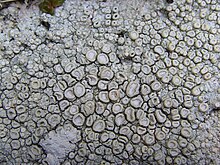


A bit of research indicated what I should be looking for was a local species of Ochrolechia, which when processed with ammonia, would develop a purple dye. However this lichen loves to live on rocks at the coast and being somewhat inland there was no readily accessible supply in any quantity.(NEVER collect lichens unless there is an abundance and they have fallen from their substrate.)  Around this time Covid lock-down was in full swing and any visits to the coast were put on hold.  I thought there would be plenty of time to revisit this and so looked for alternatives that might work.


Oak moss or stag lichen can also be developed with ammonia to produce, if not purple, then a pinkish lavender wash.  Unfortunately, even after three tries, while I was able to get a color shift, I was never able to get it to budge out of muddy maroon into purple.   Even trying to shift the pH on the advice of some excellent books, did not help.  Dye tests produced a sad medium beige and no matter how concentrated the maroon liquid got, it did not make an interesting or distinct ink color.  Which is a pity because we have masses and masses of oak moss that fall to the ground after wind storms if you know where to look.


Experiments with other local lichen were much better: usnea makes a brassy yellow, but only as a dye, not as an ink.  And then there's crottle...


Technically crottle is parmelia saxatilis .  I used a similar local species Parmelia sulcata. This lichen is reliable.  No wonder it was used to dye tweed for centuries.  The color starts developing in hours, and really, doesn't need ammonia, but I did it anyway.  The dye is dark and produces a nice warm reddish brown.  The ink is much weaker, but actually nice for shading.  A medium ash beige.  So, not traditional, but natural based and useful.

Alas, for the purple that never was.  Maybe I can make a trip to the coast over the winter and collect some experimental samples.   Failure to make lichen purple ink was the most disappointing aspect of the project. 


Sunday, August 16, 2020

A Rainbow of Threads: Natural Dyed Yarns - Part 3 - Yellow

~ Bui - an chéad dath i nGaeilge a d’fhoghlaim mé


Yellow is the most dead easy color to dye using natural materials.  There are so many plants to chose from, whether you need to dye cloth or yarn or make a pigment lake.     But some are better than others and almost all need a mordant, usually alum.

The exceptions are the lichen dyes.  Yep, we're back to lichen.  Part of the Book of Kells project is trying to reproduce a pale lavender ink extracted from lichen. Alas, unless I have a chance to visit the coast between now and when the project is due, I will have the settle for the purple and lavender lakes I've made from other plants.  But that's another post. The point is, in my quest to extract purple pigment from lichen, I had a chance to experiment with other abundant lichen, one of which can dye yellow, Usnea.
. 

This is a very environmentally fragile lichen, so again, do not gather unless there is an abundance and use only what falls on the ground.  All of mine came from fallen branches.  This lichen in particular you will only find in abundance in places with low air pollution.  So now I know certain places by parks streams have very clean air. 

I used the same method of dye extraction as I did with "crottle"...soaking in a jar of water and ammonia, shaking daily...but the results aren't as dramatic.  After a couple weeks I had a yellowish orange beige liquid.   But unlike the crottle which appears to keep its color forever, it looked as if it was going to fade.  So to save the dye and preserve it, I boiled it, strained the faded lichens out, and reduced it down to a dark yellow paste.  Then mixed it with a couple drops of grain alcohol to preserve it and  stored it in a small jar.

So when I wanted to dye a strand of yard yellow, I thought it was perfect.  But I forgot how little I had.  Maybe a large tablespoon.  Fortunately there is a long tradition of using lichen dyes to enhance vegetable dyes and vis-a-versa.  I decided to make a mixed dye bath of mullein leaves and flowers, with a pinch of alum and the lichen paste.   Having dyed with mullein before, I knew it yielded a medium pastel yellow.  I usually don't like pastels.  But in the case of yellow I prefer it. 


After bringing everything to a boil and simmering for a half hour or so, I let it sit and cool.  I was quite pleased with the results, a medium rich brassy yellow.  I suspect that is the lichen influence.  Compare with wool just dyed with mullein. 

[image to come]


Two strands of yarn were used because one will be dyed green in an exhausted woad vat. But that's yet to come....

yarn dyed yellow with Mullien and Usnea, with "crottle" brown yarn


Next:  Red


Saturday, August 15, 2020

A Rainbow of Threads: Natural Dyed Yarns - Part 2 - Brown

~Déanaimis donn


Brown.  One would think it was a simple color.  But not if one doesn't want boring beige or uninspired earth tones.  I could have used the same technique for black but with chestnut hulls instead of acorns.  That produces a very dark brown, but it's trying too much to be black, without out the coolness of actual black.  It's okay for ink, but for yarn I wanted something more like my preferred browns: rich dark color with a slight shift to the red end of the spectrum.  So instead of regular dye plants, I turned to crottle.

Crottle is a word used for a lichen dyes used in Scotland derived from Parmelia saxatilis.  Technically, what I used was a local parmelia its that can produce a similar rich brown, probably parmelia sulcuta.

NOTE:  Lichens take a long time to grow.  Please use only lichens in abundance and that have fallen off their substrate, usually tree branches.  Don't pick them off trees.  Birds and wind will provide you with plenty for a small project if you know where to look.  I gather mine in local parks, usually on the ground under conifer stands.


After gathering about a handful of lichens, I let them dry over night. Then I put them in a jar filled with half water and ammonia , leaving an inch for air at the top.   It isn't absolutely necessary to develop the dye with ammonia like with the purple lichen dyes, but I didn't want to waste time.  Turns out it develops so fast...the water starts to darken after a day...one may as well be sure.

Like developing Orchil, I shook the jar vigorously, daily for at least a week, maybe more.   By this time the water was so dark it was opaque.  Then I just let it sit for several weeks before doing anything with it.  I had an idea I'd use it as a brown ink wash in the BoK project.   And then it was there when I needed a nice warm brown.


I put the liquid, lichens and all, in a small sauce pan, along with the yarn that had been soaked in water.  Lichen dyes generally need no mordants. Then I boiled it up, turned the heat down to simmer, and simmered with lid on for about an hour, until the yarn looked about the color I wanted.  Then I took it off heat, set it outside to cool.  Once cool enough to handle, like the black yarn, I gently squeezed extra liquid out and hung it to dry outside.  Being another hot day, it was dry in 20 minutes or so.

Only after being completely dry did I rinse it in COLD water to wash extra dye off.    The unused "crottle" I put in a jar and saved for another project.  Who knows, maybe I'll use it in the Book of Kells project yet.


Ar aghaidh linn!

Next:  Yellow.


Friday, August 14, 2020

A Rainbow of Threads: Natural Dyed Yarns - Part 1 Black

~dathanna faoi Bogh Baistí le dath nádúrtha


I am working on a craft project that involves weaving yarn. It's for a meditation practice, so I won't be elaborating further.  However, I was inspired to color the yarn with natural dyes and thought I'd archive the process.

There are several threads, all a pale oatmeal natural colored hand spun wool I traded with another artist.  So for colors that are not black or some shade of brown, it was necessary for me to bleach them, and conviently, it was time to touch up my own bleached/blue dyed hair.  Since I don't do it all over anymore, there was plenty to use on a few strands of yarn.

(Note: when you can't get white wool yarn, and must bleach light beige, sheeps hair is more resistant than human hair to Clairol.  I definitely would not do this for a large piece of fabric or garment.  Start properly with white wool.)

Using boxed bleach worked well enough, though it didn't get the strands pure white, more a lightened/blued ash blond(which the package was).  But light enough for my purposes.  The yellows and blues will be yellow and blue, not muddy goldenrod and dark teal.  Never have been a massive fan of teal.   

Once I separated the lightest of the bleached yarns to be "white"(ish), I was ready to start.


~~~~~~~~~~~~~~~~~~~~~

Black - dubh

Thanks to the ongoing Book of Kells Project, I've acquired a modest competence in making "gall" ink.  I put "gall" in quotes because, we don't have gall wasps locally (at least I haven't seen them on the trees I visit and I visit MANY trees) and I think buying galls online is cheating, so I work with what I have plenty of: acorns.  Can I call it acorn gall ink? 

The principle and result is the same.   Once must however use at least twice as much or more acorns.  Okay the exact amount is whatever it takes to make the ink black.  Not dark charcoal, not dark sepia brown(though it often is in the real manuscript), but black.  

Briefly, this involves leaching tannins from crushed acorns by letting them sit in water for about a week.  At the same time, iron is steeping in vinegar to be mixed later.   This can take a couple days, longer is better.(BoK post making acorn ink).  Because the amount of tannins in acorns are so much less concentrated than galls, one has to boil the water down until it's a thick dark brown liquid before mixing in the iron salts mixture.  But to dye one thread of yarn none of that is necessary.  All that's needed is for the yarn to be thoroughly soaked in the liquids in succession.
  Acorns were crushed with a hammer, then put in water to soak for a week.  Try to use a container with a lid and keep it on or squirrels will fish out your acorns and make a mess...even if they're half moldy from last winter!  Don't worry about small amounts of mold; they won't effect results.  Let the acorns sit a week to extract the tannin.  There's no harm in letting them sit longer, though in the summer mold can develop.  If it got too much just strain it.  If it really bothers you, strain and bring to boil, then cool.  No need to boil down to a slurry like one does for ink.   Then I poured off a cup and a half, just enough to soak the yarn.


The yarn to be dyed was  wetted in water, thoroughly soaked so all the dye substances penetrate it.  This is true for all dying.  First i gently squeezed the extra water out, then put it in the bowl of acorn tannin and let it sit a while, maybe 5 minutes.  Remember this is a very small fabric piece..each yarn strand might be five feet.  


Once it was thoroughly soaked, I gently poured maybe a half cup of the iron vinegar onto it.  The results are instant and dramatic: the water turned inky black.  I poked the yarn down with my finger tips, making sure it was well mixed in the black ink.

NOTE: People with sensitive skin ...or who don't want black fingertips for the day...should use  latex or rubber gloves.  I don't have sensitive skin and so am a bit blase except with the strongest chemicals.


After leaving the yarn in for a few minutes, I took it out, and gently squeezed the excess.  DO NOT WRING IT OUT OR RINSE.  Leaving it dry first will make it more color fast, though iron and oak tannin is pretty damn color fast.   It was a hot day so I draped the yarn on a bush and it dried in less than a half hour if that.  Not every color should be exposed to sunlight so soon after dyeing, but were talking about oak tannin, so....


Agus sin e!   One black piece of yarn.  Not as dark as I wanted, but good enough for the project.  


Next:  Part 2 - Brown